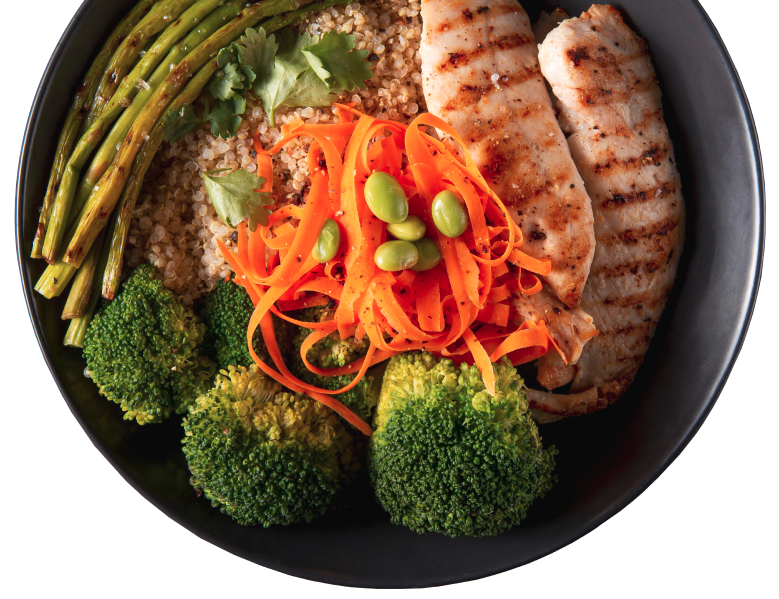
Food safety is not just about avoiding illness. It is about understanding what we eat, how we prepare it, how we store it, and how small everyday decisions can protect our health.
01 / KNOW
02 / PREPARE
03 / PROTECT
FOOD SAFETY NOTE
"Safe food is smart food."
01 — THE BASICS
SAFE FOOD STARTS BEFORE THE FIRST BITE.
01
CLEAN
Wash hands, surfaces, and utensils thoroughly before and after food handling. Bacteria like Salmonella and E. coli transfer rapidly on unwashed kitchen counters and cutting boards.
02
SEPARATE
Keep raw meat, poultry, seafood, and eggs away from ready-to-eat foods. Use dedicated cutting boards—red for raw meats and green for vegetables—to halt cross-contamination.
03
CHILL
Temperature control is critical. Keep refrigeration at or below 4°C (40°F). Microorganisms multiply exponentially between 4°C and 60°C (the Danger Zone).
INTERACTIVE GUIDE
FROM MARKET TO MEAL.
Click each stage to unlock essential food safety protocols across the lifecycle of your food.
STAGE 01
Smart Purchasing at the Grocery Market
Pick up non-perishables first and raw meats, poultry, and dairy last. Inspect packaging for vacuum seals, check expiration dates, and ensure frozen items are solid with no frost build-up.
Use separate plastic bags for raw meat and produce
Verify refrigeration unit temperatures at the store
MARKET PHASE
CONTAMINATION PATHWAYS
THE INVISIBLE THINGS WE MISS.
1
Pathogen Source
Bacteria like Campylobacter & Norovirus originate in raw animal tissues, unwashed soil, or contaminated water.
2
Cross Transfer
Using the same knife or cloth for raw chicken and fresh salad transfers microscopic bacterial colonies instantly.
3
Thermal Abuse
Leaving perishable cooked meals at room temperature (20°C - 37°C) allows bacterial count to double every 20 minutes.
4
Foodborne Illness
Ingestion leads to gastroenteritis, severe stomach cramps, dehydration, or long-term autoimmune complications.
COLD STORAGE SCIENCE
COLD DOESN'T MEAN SAFE FOREVER.
Refrigeration slows bacterial growth but does not halt it completely. Psychrophilic bacteria like Listeria monocytogenes can continue to thrive even at 4°C.
4°C Refrigerator Limit
Ensure your fridge is calibrated to 4°C (40°F) or below. Freezer must stay at -18°C (0°F).
The 2-Hour Leftover Rule
Refrigerate perishable cooked food within 2 hours of cooking (1 hour if ambient heat is over 32°C).
Airtight Glass Storage
Store leftovers in shallow, airtight glass containers to facilitate fast, even cooling and prevent odors.
3 to 4 Day Max Rule
Consume cooked leftovers within 3–4 days. If keeping longer, freeze immediately in vacuum packs.
THERMAL ACCURACY
COOK WITH CONFIDENCE.
Poultry & Minced Meat74°C (165°F)
Chicken, turkey, stuffed meats, and reheated leftovers must reach 74°C internally.
Ground Meats (Beef, Pork)71°C (160°F)
Ground meat distributes surface bacteria throughout the meat, requiring higher heat.
Whole Beef, Pork, Fish63°C (145°F)
Allow 3 minutes of rest time after cooking whole cuts to maintain safety and juiciness.
MYTH BUSTING
MYTH OR FACT?
Test your kitchen intuition against scientific food-safety reality.
STATEMENT 01
"If food smells fine and looks clean, it is safe to eat."
IT IS A MYTH! Foodborne pathogenic bacteria (like Salmonella) do not alter the smell, taste, or visual appearance of food.
STATEMENT 02
"Washing raw chicken before cooking removes surface bacteria."
IT IS A MYTH! Washing raw poultry splashes bacteria up to 3 feet around your sink and counters. Thermal cooking is what kills bacteria.
STATEMENT 03
"Freezing food preserves quality but does not destroy all bacteria."
CORRECT FACT! Freezing puts bacteria into dormancy. Once thawed, bacteria reactivate and multiply at standard room speed.
LABEL DECODER
READ THE LABEL LIKE A PRO.
Food packaging labels are dense with vital legal and safety data. Click the hotspots on our mock label to decode hidden expiration codes, allergen statements, and handling guides.
Hover or click any interactive target marker on the right to examine information.
Nutrition Facts
8 servings per container
Serving size2/3 cup (55g)
USE BY: 24/OCT/2026
CONTAINS: MILK, SOY, PEANUTS
STORAGE: Keep refrigerated at 4°C
Manufactured by Food Safety Hub Labs Inc. Quality Assured.
SAFETY LAB
YOUR KITCHEN IS YOUR FIRST SAFETY LAB.
SURFACE SANITATION
Sanitize kitchen counter surfaces with diluted bleach or food-safe sanitizing sprays before and after meal preparation to destroy invisible bacterial bio-films.
The Microbial Topography of Household Cutting Boards
Understanding plastic versus wood cutting surfaces and how micro-grooves harbor bacterial colonies.
NUTRITION SAFETY • 7 MIN READ
Raw vs. Cooked Vegetables: Bioavailability & Safety
How heat breaks down plant cell walls while destroying surface pathogens in fresh spinach and brassicas.
STORAGE SCIENCE • 4 MIN READ
Demystifying Expiration Dates: Sell-By vs. Best-Before
A scientific guide to understanding commercial date codes and avoiding unnecessary food waste.
OUR MISSION
BETTER FOOD STARTS WITH BETTER KNOWLEDGE.
safekitchenlab is an independent digital publication devoted to translating complex food microbiology, culinary science, and nutritional health into actionable daily habits.
We exist for one reason: to make sure the knowledge that keeps people safe in professional kitchens is available to everyone who cooks at home. No paywalls. No jargon. No fear-mongering. Just clear, evidence-based guidance written by people who work in food science every day.
600M
Annual Foodborne Cases
1 in 10
People Affected Yearly
70%
Preventable at Home
100%
Evidence-Based
Why Food Safety Matters
According to the World Health Organization, an estimated 600 million people fall ill after consuming contaminated food every year. Most foodborne incidents occur not in commercial factories, but in home kitchens due to minor temperature or handling errors.
The most common causes are surprisingly ordinary: a cutting board used for both raw chicken and salad greens. A pot of soup left to cool on the counter for three hours. A refrigerator running two degrees too warm. None of these require malice or negligence—only a small gap in knowledge that most people were never taught.
Our journal bridges the gap between scientific laboratories and home cooks, promoting preventive health education that saves lives and prevents disease.
WHAT WE PUBLISH
FOUR AREAS OF FOCUS.
Every article, guide, and reference we publish falls into one of four categories. Together, they form a complete picture of food safety and nutrition for the home kitchen.
01
Food Microbiology
How bacteria, viruses, and parasites behave in food, and the practical steps that prevent them from reaching dangerous levels. From Salmonella and E. coli to Listeria and norovirus, we explain the science without the scare tactics.
02
Temperature & Storage
The safe temperature ranges for cooking, cooling, refrigerating, and freezing every major food category. We cover the danger zone, cold chain integrity, and the practical habits that keep food out of risk.
03
Kitchen Hygiene
Cross-contamination prevention, cutting board protocols, handwashing technique, and the cleaning routines that matter most. Small habits, done consistently, prevent the majority of home foodborne illness.
04
Nutritional Health
How cooking methods affect nutrient retention, how to read ingredient labels with confidence, and how to build meals that support long-term health without sacrificing flavor or enjoyment.
HOW WE WORK
EDITORIAL STANDARDS.
Peer-Reviewed Sources
Every claim we publish is traceable to peer-reviewed research, WHO guidance, FDA regulations, or equivalent authoritative bodies. Sources are cited at the bottom of every article.
Independent & Unsponsored
We accept no advertising from food manufacturers, supplement brands, or kitchen appliance companies. Our recommendations are never influenced by commercial relationships.
Reviewed by Experts
All technical content is reviewed by credentialed food scientists and public health professionals before publication. Corrections are published openly and dated.
THE PEOPLE
BEHIND THE JOURNAL.
D
Dr. Dana Whitfield
Editor-in-Chief · Food Microbiologist
Twenty years of research in foodborne pathogens. Former lead scientist at a national public health laboratory.
R
Rahul Menon
Senior Editor · Culinary Scientist
Translates food science research into practical kitchen guidance. Former recipe developer for a national test kitchen.
A
Amara Okafor
Contributing Writer · Registered Dietitian
Covers nutritional health and long-term wellness. Practicing dietitian with a focus on family nutrition education.
WHAT WE ARE NOT
A FEW HONEST CLARIFICATIONS.
We Are Not A Medical Service
Nothing on this website constitutes medical advice. If you or a family member are experiencing symptoms of foodborne illness, consult a licensed healthcare provider immediately.
We Do Not Sell Products
We do not sell thermometers, cutting boards, storage containers, or supplements. Our recommendations are based purely on what the evidence supports.
We Do Not Use Fear
Food safety is about building good habits, not scaring people away from their kitchens. We write with calm clarity—never with alarm.
We Do Not Accept Ads
No display ads, no sponsored posts, no affiliate links. Our publication is funded entirely by reader support and grants.
STAY INFORMED
GET WEEKLY FOOD SAFETY NOTES.
Every Tuesday we publish one new article on food safety, nutrition, or kitchen science. Subscribe to receive it in your inbox—no spam, no selling your data, unsubscribe anytime.
Explorations in food biology, kitchen safety protocols, and nutritional science.
KITCHEN HYGIENE
The Microbial Topography of Household Cutting Boards
By Dr. Aris Thorne•October 12, 2026•5 min read
Cutting boards represent the primary mechanical contact point in meal preparation. Every slice leaves micro-fissures that can harbor microscopic organic debris and moisture.
Plastic vs. Wood: The Scientific Consensus
While plastic boards were historically touted as non-porous and safer, research demonstrates that knife cuts create deep plastic grooves where bacteria evade dishwasher sprays. Conversely, hardwoods like maple possess natural capillary action that draws moisture downward, desiccating bacterial cells.
"Sanitation efficacy is less about the board material and more about immediate thermal drying and surface separation."
Safety Protocol Checklist
Use red cutting boards exclusively for raw meat and poultry.
Wash wooden boards with 60°C hot soapy water immediately after use.
Replace plastic boards once deep score lines and grooves develop.
SAFETY LIBRARY
DOWNLOADABLE GUIDES & CHARTS
Essential food safety printables, temperature charts, and inspection checklists for your kitchen.
Every resource below is free, printer-friendly, and reviewed by credentialed food scientists. Print them, tape them inside a cupboard, or share them with your household.
12
Free Guides
PDF
Print-Ready Format
100%
Free to Share
Peer
Scientist-Reviewed
CATEGORY 01
Temperature & Cooking Guides
Internal Cooking Temperature Chart
A quick-reference guide for safe internal cooking temperatures of all major proteins.
Covers poultry, beef, pork, lamb, fish, shellfish, eggs, and leftovers. Includes both USDA-recommended minimums and chef-preferred targets for texture and flavor.
PDF · 2 pages
The Danger Zone Quick Card
A wallet-sized card summarizing the 40°F to 140°F bacterial growth range and safe cooling times.
Perfect for taping inside a cupboard door or keeping near the stove. Includes 2-hour and 1-hour rule clarifications for hot days.
PDF · 1 page
Cooling & Reheating Timeline
Step-by-step guide to safely cooling large batches of soup, stew, and leftovers within 2 hours.
Includes ice-bath method, shallow container technique, and safe reheating temperatures for each food category.
PDF · 3 pages
CATEGORY 02
Hygiene & Sanitation Checklists
Kitchen Hygiene Inspection Checklist
Weekly sanitation audit checklist to ensure commercial-grade cleanliness in home kitchens.
Twenty-two checkpoints covering countertops, sinks, sponges, refrigerators, cutting boards, and pantry storage. Includes frequency recommendations.
PDF · 2 pages
Sanitizing Solution Ratio Card
Precise dilution ratios for chlorine and quaternary ammonium sanitizers used in kitchens.
Includes food-contact-safe concentrations, contact time requirements, and safe storage guidance.
PDF · 1 page
Handwashing Protocol Poster
Printable poster showing correct 20-second handwashing technique for the kitchen.
Ideal for family kitchens with young children. Includes when-to-wash checklist and common mistakes to avoid.
PDF · 1 page
CATEGORY 03
Storage & Organization
Refrigerator Shelf Allocation Matrix
Infographic showing optimal shelf placement to prevent drip contamination from raw meat.
Includes clear labeling for raw proteins, dairy, produce, and ready-to-eat items, plus safe temperature zones for each shelf.
PDF · 1 page
Freezer Storage Time Limits
Reference chart for how long each food category stays safe and high-quality in the freezer.
Covers raw and cooked meats, soups, casseroles, baked goods, and produce. Distinguishes between "safe indefinitely" and "best flavor window."
PDF · 2 pages
Pantry Shelf-Life Reference
Dry goods, canned items, oils, and spices—sorted by realistic expiration windows.
Includes signs of spoilage to watch for, safe storage conditions, and how to tell when "best-before" dates are conservative.
PDF · 3 pages
CATEGORY 04
Special Populations & High-Risk Groups
Pregnancy Food Safety Guide
A complete printable checklist of foods to avoid and safe alternatives during pregnancy.
Covers Listeria, Toxoplasma, and mercury risks, plus safe handling of deli meats, soft cheeses, eggs, and seafood.
PDF · 4 pages
Immunocompromised Household Guide
Food safety guidance for households with elderly, immunocompromised, or chronically ill members.
Includes stricter cooking temperatures, produce washing protocols, and higher-risk foods to avoid.
PDF · 3 pages
Infant & Toddler Feeding Safety
Practical food safety guide for preparing and storing food for children under five.
Includes safe puree storage times, reheating guidance, choking hazard notes, and high-risk foods to postpone.
PDF · 3 pages
HOW TO USE
MAKING THESE RESOURCES WORK FOR YOU.
01
Print & Post
Tape the temperature chart inside a cupboard door. Pin the refrigerator matrix on the fridge itself. The best reference is the one you can see without a screen.
02
Walk Through Weekly
Use the hygiene checklist every Sunday. It takes under ten minutes and catches small issues before they become bigger problems.
03
Share Freely
Send them to family members, new parents, or roommates. All resources are free to copy, print, and share—no attribution required.
CONTRIBUTE & SUGGEST
NEED A GUIDE WE HAVEN'T MADE YET?
Our library grows from reader requests. If there is a food safety chart, checklist, or reference you would find useful, tell us. We add new resources every month based on what the community actually needs.
Our editorial board and food microbiology consultants are ready to answer your questions regarding food handling, storage, or article inquiries.
hello@safekitchenlab.com
Editorial Office: 450 Health Sciences Parkway, Suite 800
Thank you! Your message has been routed to our food safety editorial team.
Legal & Data Protection
Privacy Policy
Effective Date: September 2026
At safekitchenlab, accessible from safekitchenlab.com, one of our main priorities is the privacy of our visitors. This Privacy Policy document contains types of information that is collected and recorded by safekitchenlab and how we use it.
This policy applies to all visitors, newsletter subscribers, and readers of our editorial content. It explains exactly what we collect, why we collect it, and the rights you hold over your data. It is written to be understood—not buried in legal language.
1. Information Collection & Local Storage
We do not require account registration to view our editorial contents. Newsletter subscriptions store your email locally in your browser storage (localStorage) or standard client cookies to maintain your newsletter subscription status.
Specifically, the only information we retain in your browser is:
• Newsletter subscription state — a flag indicating whether you have opted into our journal, so we do not ask again on every visit.
• Display preferences — any layout, font size, or accessibility settings you have chosen.
• Navigation memory — a record of which article or page you last visited.
• Reading progress — for longer guides, so you can return to where you left off.
We do not collect your name, email address, IP address, device fingerprint, or browsing history beyond what is stored locally. Personal information is only collected when you voluntarily submit it through a newsletter signup or contact form.
2. Cookies
Like any other website, safekitchenlab uses 'cookies' to store information including visitors' preferences, and the pages on the website that the visitor accessed or visited.
The information is used to optimize the users' experience by customizing our web page content based on visitors' browser type and/or other information. We do not use cookies for advertising, tracking across other sites, or profiling.
3. How We Use Your Information
Information we collect is used strictly for the following purposes:
• Delivering newsletter content you have opted into.
• Responding to inquiries and resource requests.
• Improving the clarity, layout, and usefulness of our editorial content.
• Analyzing aggregate traffic patterns to refine site performance.
• Complying with applicable legal and regulatory obligations.
We never sell, rent, or lease your personal information to third parties. We do not run targeted advertising based on your data.
4. Third-Party Services
We use a limited set of infrastructure providers to operate the platform, such as web hosting and email delivery services. Each is contractually bound to use your data only for the purpose it was shared and in accordance with this policy.
We do not use Google Analytics, third-party tracking pixels, or any external advertising networks. Any analytics we perform is self-hosted and privacy-first.
5. Data Security
We implement industry-standard safeguards including TLS encryption, access controls, and periodic security reviews. Access to personal data is restricted to authorized team members only.
However, no method of transmission over the internet is entirely secure. While we take every reasonable precaution, we cannot guarantee absolute protection against unauthorized access.
6. Data Retention
We retain personal information only for as long as necessary to fulfill the purposes described in this policy, or as required by law:
• Newsletter subscriptions — retained until you unsubscribe.
• Contact inquiries — retained for up to 24 months, then securely deleted.
• Analytics data — aggregated and anonymized after 14 months.
7. Your Rights
Depending on your jurisdiction, you may have the right to:
• Request access to the personal data we hold about you.
• Request correction of inaccurate information.
• Request deletion of your personal data.
• Withdraw consent for newsletter communications at any time.
• Lodge a complaint with a relevant data protection authority.
To exercise any of these rights, please contact us at privacy@safekitchenlab.com. We aim to respond to all privacy-related requests within 7 business days.
8. Children's Privacy
Our website is not directed at individuals under the age of 16. We do not knowingly collect personal information from children. If such data is discovered, it will be deleted promptly.
9. Updates To This Policy
We may update this privacy policy periodically to reflect changes in law, technology, or our practices. The effective date at the top of this page will always indicate the most recent revision. Continued use of the site constitutes acceptance of any updated terms.
10. Contact
For questions regarding this privacy policy or the handling of your personal data, please reach out to us at privacy@safekitchenlab.com. We are committed to transparency and will answer any question you may have.
Community Guidelines
Terms & Conditions
Effective Date: September 2026
Welcome to safekitchenlab! These terms and conditions outline the rules and regulations for the use of safekitchenlab's Website.
By accessing this website, we assume you accept these terms and conditions. Do not continue to use safekitchenlab if you do not agree to take all of the terms and conditions stated on this page.
1. Editorial Disclaimer
The information provided on safekitchenlab is intended for general educational and scientific awareness only. While our content is reviewed by food safety professionals, it does not constitute clinical medical diagnosis or legal health inspection advice.
Readers should always consult a licensed healthcare provider for personal medical concerns, and consult local regulatory authorities for commercial food service compliance.
2. Intellectual Property
Unless otherwise stated, safekitchenlab and/or its licensors own the intellectual property rights for all material on safekitchenlab. All intellectual property rights are reserved.
You may not reproduce, distribute, modify, or republish any content without prior written permission. Short excerpts for review or commentary purposes may be used provided clear attribution and a link to the original page are included.
Our downloadable guides, charts, and checklists are provided free of charge for personal, household, or educational use. They may be copied, printed, and shared without attribution.
3. Acceptable Use
You agree to use this website for lawful purposes only. Prohibited activities include:
• Attempting to gain unauthorized access to our systems or data.
• Introducing malware, viruses, or harmful code.
• Scraping, harvesting, or automated collection of content.
• Impersonating safekitchenlab or its contributors.
• Interfering with the proper functioning of the site.
• Using the site to harass, threaten, or harm others.
4. Newsletter & Communications
By subscribing to our newsletter, you consent to receive periodic emails from safekitchenlab. We send one editorial digest per week and occasionally announce new resources.
You may unsubscribe at any time through the link at the bottom of any newsletter email or through the unsubscribe form on our website. Unsubscribe requests are processed immediately.
5. Limitation of Liability
safekitchenlab shall not be held liable for any direct, indirect, incidental, or consequential damages arising from the use of this website or reliance on its content. This includes, but is not limited to, losses related to food handling decisions, health outcomes, or business operations.
Our total cumulative liability is limited to the amount you have paid us in the 12 months preceding the claim, which for free readers is zero.
6. External Links
Our website may contain links to third-party websites, including government agencies, research institutions, and food safety organizations. These are provided for convenience and reference only. We do not endorse or assume responsibility for the content, privacy practices, or accuracy of any external site.
7. User Submissions
By submitting comments, corrections, feedback, or resource suggestions to our platform, you grant safekitchenlab a non-exclusive, royalty-free license to publish, edit, and distribute that content. You confirm that you own the rights to any material submitted and that it does not infringe on third-party rights.
8. Modifications To Terms
We reserve the right to update these terms at any time. Changes take effect immediately upon publication. It is your responsibility to review this page periodically for updates.
9. Governing Law
These terms shall be governed by and construed in accordance with applicable international and local laws. Any disputes arising from the use of this website shall be subject to the exclusive jurisdiction of the courts in our registered location.
10. Contact
For questions regarding these terms and conditions, please contact us at legal@safekitchenlab.com. We aim to respond to all inquiries within 7 business days.
Website Usability
Cookie Policy
Effective Date: September 2026
This is the Cookie Policy for safekitchenlab. We use essential analytical cookies to ensure proper site navigation, interactive state management, and user preference tracking.
This policy explains what we store, why we store it, and how you remain in control. It is written to be read—not skimmed.
1. What Are Cookies
Cookies and local browser storage are small text files stored on your device when you visit a website. They allow the site to remember your actions and preferences over time—such as whether you have already subscribed to our newsletter or which article you last read.
These technologies do not contain personal information and cannot be used to identify you directly. However, they may be linked to data you voluntarily provide.
2. What We Store
We store only the following data in your browser:
• Newsletter subscription state — a flag indicating whether you have opted into our journal, so we do not ask again on every visit.
• Navigation memory — a record of which page or article you last visited, so returning feels continuous.
• Reading progress — for longer guides, so you can resume from where you left off.
• Display preferences — any layout or accessibility settings you have chosen.
3. What We Do Not Store
We do not store your name, email address, IP address, device fingerprint, or browsing history in cookies or local storage beyond what you voluntarily submit. Personal information is stored securely on our servers only when you submit it through a newsletter signup or contact form.
4. Why We Use Local Storage
Local browser storage allows the website to remember your preferences without requiring an account or login. It is a convenience for you, not a tracking mechanism for us. Without it, every visit would feel like the first—settings would reset and navigation would be less fluid.
5. Third-Party Content
Some pages may embed content from external platforms, such as video players or research citations. These platforms may set their own cookies, which we do not control. We recommend reviewing their privacy and cookie policies if you have concerns.
6. How To Manage Your Preferences
You can clear local storage at any time through your browser settings. Most browsers allow you to:
• View and delete stored data for individual sites.
• Block all cookies and local storage entirely.
• Set exceptions for sites you trust.
• Automatically clear storage when the browser closes.
Please note that disabling local storage may affect the functionality of this website, including the ability to remember your newsletter preference or reading progress.
7. Retention
Local storage data remains on your device until you clear it or until it expires naturally:
• Subscription preferences — retained for up to 12 months.
• Navigation memory — retained for up to 30 days.
• Reading progress — retained for up to 90 days.
8. Updates To This Policy
We may update this cookie policy periodically to reflect changes in technology or legal requirements. Any updates will be published on this page with a revised effective date. Continued use of the site constitutes acceptance of the current policy.
9. Contact
If you have questions about how we use local browser storage, please reach out to us at privacy@safekitchenlab.com. We are happy to explain exactly what is stored and how to remove it.
WEEKLY DISPATCH
KNOW MORE. EAT SMARTER.
Get practical food-safety guides, healthy food tips, new articles, and useful kitchen knowledge delivered directly to your inbox every Thursday.